Introduction
If you're looking to understand Keto Budget Tips, you're in the right place.
Struggling to stick to your keto goals without breaking the bank?
This guide offers actionable keto budget tips to help you eat low-carb without overspending. From affordable ingredients to smart shopping, discover how to maintain ketosis cost-effectively.
Struggling to stick to your keto goals without breaking the bank? Keto Budget Tips can make a significant difference in maintaining a low-carb lifestyle while keeping your expenses in check. This comprehensive guide offers actionable strategies, affordable ingredient options, and smart shopping techniques to help you stay keto on a limited budget. Whether you’re just starting or looking to optimize your current routine, these tips will help you cut costs without compromising your health goals.
Is Keto on a Tight Budget Viable?
Start Here: Are you currently spending a lot on keto-friendly foods, or are you new to the diet and worried about costs?
-
Option A → You spend excessively on specialty products and fresh meats.
- Sub-question?
- Yes → Consider focusing on more affordable ingredients and bulk buying strategies.
- No → You might already be managing costs well; continue with your current plan while optimizing further.
- Sub-question?
-
Option B → You’re on a tight budget but want to try keto.
- Sub-question?
- Yes → Yes, keto can be affordable with the right approach.
- No → You may need to reassess whether keto is the best low-cost diet for your situation.
- Sub-question?
Conclusion: With strategic planning, keto on a tight budget is definitely possible. The key is focusing on cost-effective ingredients, smart shopping, and meal planning.
Understanding the Cost of Keto on a Budget
Why keto can be affordable
The keto diet emphasizes whole, minimally processed foods—many of which are naturally inexpensive. Eggs, canned fish, and seasonal vegetables are typically cost-effective and keto-friendly, making it possible to maintain your diet without overspending.
Common costly pitfalls
- Buying pre-packaged keto snacks
- Specialty keto products (mct oils, keto bars)
- High-end cuts of meat or organic produce
- Frequent dining out or takeout
Avoiding these can significantly reduce your expenses.
Budget-friendly keto principles
- Focus on whole foods
- Buy in bulk
- Plan meals around sales and seasonal produce
- Limit dependence on expensive processed keto products
Affordable Keto Ingredients and Shopping Tips
Cost-effective protein sources
| Protein Source | Approximate Cost (per lb) | Keto-Friendliness | Notes |
|---|---|---|---|
| Eggs | $1.50 – $3.00 | High | Versatile, inexpensive, rich in protein |
| Canned tuna/sardines | $0.70 – $1.50 per can | High | Long shelf life, easy to use |
| Chicken thighs | $1.50 – $2.50 | High | Cheaper than breasts, flavorful |
| Ground beef (80/20) | $3.00 – $4.50 | High | Use in various recipes |
Inexpensive healthy fats
| Fat Source | Approximate Cost | Keto-Friendliness | Notes |
|---|---|---|---|
| Bulk nuts/seeds | $4 – $8 per lb | Moderate | Use in moderation due to carbs |
| Coconut oil | $3 – $6 per quart | High | Great for cooking & baking |
| Olive oil | $5 – $10 per liter | High | Use for salads and cooking |
| Butter | $2 – $4 per lb | High | Cost-effective and versatile |
Low-cost vegetables and produce
| Vegetable/Produce | Approximate Cost | Keto-Friendliness | Notes |
|---|---|---|---|
| Frozen spinach | $1 – $2 per lb | High | Economical, nutrient-dense |
| Cabbage | $0.50 – $1 per lb | High | Affordable, versatile |
| Zucchini | $1 – $2 per lb | High | Use for zoodles, stir-fries |
| Seasonal produce | Varies | High | Purchase when in season for savings |
Cost Comparison of Common Keto Ingredients
| Feature | Eggs | Canned Tuna | Chicken Thighs | Almond Flour | Avocado |
|---|---|---|---|---|---|
| Cost (per unit) | $0.20 – $0.30 | $0.70 – $1.50 per can | $1.50 – $2.50 per lb | $4 – $6 per lb | $1 – $2 each |
| Nutritional Value | High protein, versatile | Protein-rich, omega-3s | Lean protein, affordable | Low-carb flour alternative | Healthy fats, fiber |
| Storage & Shelf Life | Long (weeks) | Long (months) | Several days in fridge | Long (months if stored properly) | Shorter, needs refrigeration |
| Best For | Breakfast, baking, snacks | Quick meals, salads | Main dishes, stir-fries | Baking, breading | Salads, toppings |
Methodology/Evaluation Criteria:
- Cost per serving: Focus on ingredients with the lowest cost per meal portion.
- Nutritional density: Prioritize foods rich in protein and healthy fats.
- Shelf stability: Favor items that last longer to reduce waste.
- Versatility: Choose ingredients adaptable to various recipes.
Budget-Friendly Keto Shopping Checklist
- Eggs: Purchase in dozen cartons for savings.
- Canned fish: Stock up on tuna, sardines, salmon.
- Meat in bulk: Buy chicken thighs, ground beef, or pork in bulk from warehouse stores.
- Frozen vegetables: Opt for frozen spinach, broccoli, or mixed vegetables.
- Cooking oils: Store coconut and olive oil for versatile use.
- Nuts & seeds: Buy in bulk for snacks and recipes.
- Low-cost produce: Shop seasonal and local to maximize savings.
- Spices & herbs: Use dried herbs to flavor dishes without extra cost.
- Bulk pantry staples: Stock up on almond flour, coconut flour, and other keto baking ingredients when on sale.
Smart Strategies to Save Money on Keto
Batch cooking and meal prepping
Preparing meals in advance reduces waste and minimizes last-minute takeout, which can be costly. For example, cook a large batch of keto chili or casseroles and portion them out for the week.
Buying in bulk
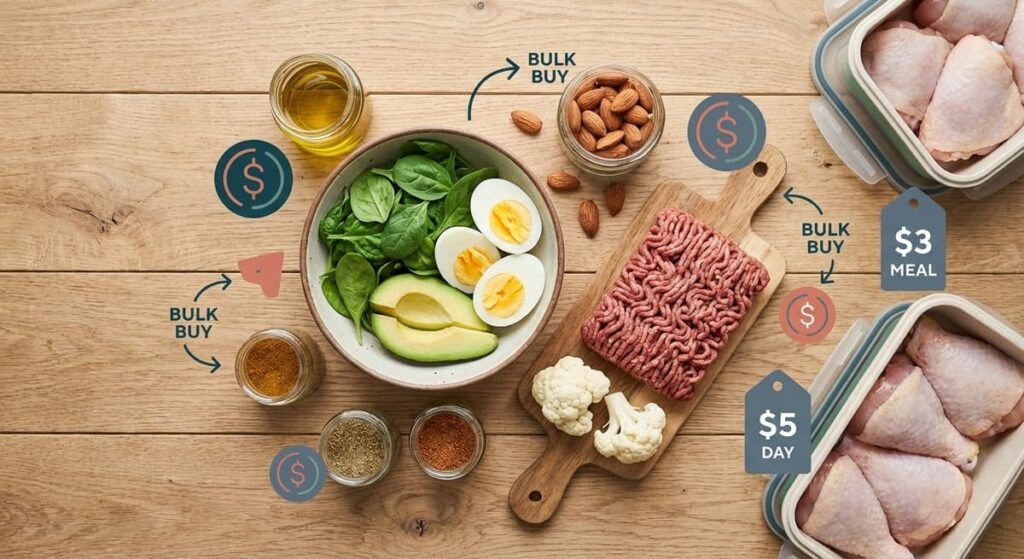
Warehouse stores like Costco or local bulk suppliers can offer significant savings on meats, oils, and pantry staples. Freeze what you don’t immediately use to prevent spoilage.
Couponing and store deals
Use store apps, loyalty programs, and coupons to capitalize on discounts. Watch for sales on meats and produce, and plan your meals around these deals.
Maintaining Keto on a Tight Budget Long-Term
Monitoring your macros economically
Use free apps like {{LINK:macro-tracker}} to keep track of your macros without extra cost. Focus on affordable ingredients that meet your nutritional needs.
Adapting recipes for variety and savings
Modify recipes to incorporate seasonal produce or leftovers. Use simple substitutions, like replacing expensive nuts with more affordable seeds.
Balancing cost and nutrition
Prioritize nutrient-dense, low-cost foods, and avoid expensive processed keto products. Remember, whole foods are generally more economical and healthier.
Conclusion
Maintaining a keto lifestyle on a tight budget is entirely achievable with strategic planning, smart shopping, and creative meal preparation. Focus on cost-effective ingredients, utilize bulk buying, and leverage sales to keep your grocery bills low. With these keto budget tips, you can enjoy the benefits of low-carb eating without the financial stress.
Start implementing these strategies today and enjoy a sustainable, low-cost keto journey. Share your success stories or ask questions in the comments!
Disclosure
Always consult with a healthcare professional before making significant dietary changes, especially if you have health conditions or are on medication.
FAQ Section
Q: Can I do keto on a limited budget?
A: Yes, by choosing affordable ingredients, planning meals ahead, and shopping smartly, you can maintain a keto diet without overspending.
Q: What are the cheapest keto protein sources?
A: Eggs, canned fish like sardines and tuna, and chicken thighs are some of the most budget-friendly and keto-compatible protein options.
Q: How can I save money on keto vegetables?
A: Buy seasonal produce, shop in bulk, and choose frozen vegetables when fresh options are expensive to keep costs low.
Q: Are keto snacks always expensive?
A: Not necessarily. Simple snacks like nuts, seeds, or homemade fat bombs from affordable ingredients can be cost-effective.
Q: How do I plan keto meals on a tight budget?
A: Create weekly meal plans, shop with a list, buy in bulk, and prepare meals in advance to minimize waste and save money.
By applying these practical keto budget tips, you can enjoy a healthy, low-carb lifestyle without breaking the bank. Happy keto shopping!