
Introduction
Did you know that a specialized keto approach can significantly reduce seizures in some epilepsy patients? This is where Therapeutic Ketosis for Epilepsy comes into play—a targeted dietary intervention designed to induce sustained ketosis to help manage seizure activity. While many people are familiar with the general keto diet for weight loss, therapeutic ketosis for epilepsy is a more precise application, tailored to produce specific metabolic effects that can benefit seizure control.
This article compares therapeutic ketosis for epilepsy with other ketogenic strategies, providing insights into how different approaches may align with individual needs. Whether you are a caregiver, healthcare professional, or keto enthusiast exploring therapeutic options, understanding these differences can help optimize treatment outcomes safely and effectively.
Therapeutic Ketosis Decision Tree
Start Here: Are you considering keto for epilepsy management?
- Yes → Proceed to evaluate seizure frequency and medical supervision needs.
- No → Consider standard keto for general health or weight loss.
Option A: Seizures are frequent or severe
- Consequence: Medical supervision recommended; therapeutic ketosis may be appropriate.
- Sub-question: Do you have access to a healthcare team experienced in ketogenic therapies?
- Yes → Consult an epilepsy specialist and implement therapeutic ketosis plan.
- No → Seek professional guidance before starting.
- Sub-question: Do you have access to a healthcare team experienced in ketogenic therapies?
Option B: Seizures are infrequent or mild
- Consequence: Standard keto or less restrictive diets might suffice.
- Sub-question: Are you interested in using diet as adjunct therapy?
- Yes → Explore modified ketogenic protocols.
- No → Maintain current management with medical guidance.
- Sub-question: Are you interested in using diet as adjunct therapy?
Understanding Therapeutic Ketosis for Epilepsy
What is Therapeutic Ketosis?
Therapeutic ketosis refers to maintaining elevated blood ketone levels—typically between 2-5 mmol/L—through a carefully structured diet. Unlike the nutritional ketosis achieved during standard low-carb diets, therapeutic ketosis aims for a higher and more consistent level of ketones, which have been shown to exert anticonvulsant effects in many individuals with epilepsy [[LINK:epilepsy-science]].
How it differs from standard keto
| Feature | Standard Keto Diet | Therapeutic Ketosis for Epilepsy | Modified/Other Ketogenic Strategies |
|---|---|---|---|
| Ketone Level Range | 0.5-1.5 mmol/L | 2-5 mmol/L | Varies (often lower or targeted) |
| Dietary Composition | High fat, moderate protein, very low carbs | Similar but may include stricter macro control | Modified Atkins, Low GI, less restrictive |
| Primary Goal | Weight loss, metabolic health | Seizure reduction, neuroprotection | Glycemic control, lifestyle management |
| Medical Supervision | Often recommended | Essential | Varies based on protocol |
Scientific basis for epilepsy treatment
Research indicates that elevated ketone bodies can modulate neuronal excitability, reduce inflammation, and influence neurotransmitter activity, collectively contributing to decreased seizure frequency [[LINK:pubmed]].
Keto Diet Variations for Epilepsy Management
Classical ketogenic diet
This is the traditional, highly restrictive diet involving a 4:1 fat to combined protein and carbohydrate ratio. It requires meticulous meal planning and is typically administered in a clinical setting. It has been well-studied and shown to significantly reduce seizures in children and some adults [[LINK:mayo-clinic]].
Modified Atkins diet
A less restrictive variation, the Modified Atkins Diet (MAD) allows for more protein and some carbs, generally under 20 grams per day. It is easier to implement and may induce sufficient ketosis for seizure control in many patients.
Low glycemic index treatment (LGIT)
Focusing on carbohydrate quality, LGIT limits carbs to those with a low glycemic index, aiming for steadier blood glucose and moderate ketosis. It is often used as an alternative or adjunct to other ketogenic approaches with fewer side effects.
Implementing Therapeutic Ketosis Safely
Steps to Achieve Therapeutic Ketosis for Epilepsy
- Step 1: Obtain medical clearance and guidance from a healthcare professional experienced in ketogenic therapies.
- Step 2: Develop a personalized dietary plan with precise macro calculations to reach targeted ketosis levels.
- Step 3: Educate yourself about meal preparation and macro tracking.
- Step 4: Start with a gradual carbohydrate reduction to minimize side effects like keto flu.
- Step 5: Monitor blood ketone levels regularly using urine strips, breath analyzers, or blood ketone meters.
- Step 6: Adjust dietary intake based on ketone readings and seizure response.
- Step 7: Maintain regular follow-up appointments for neurological assessment and nutritional support.
- Step 8: Be vigilant about potential side effects, nutrient deficiencies, and overall health status.
Safety considerations
- Regular blood work to monitor lipid profile, liver, and kidney function.
- Ensuring adequate micronutrient intake to prevent deficiencies.
- Recognizing signs of keto flu, dehydration, or metabolic imbalance.
- Understanding that not all individuals respond equally; some may experience adverse effects.
Benefits and Challenges of Therapeutic Ketosis
Potential seizure reduction
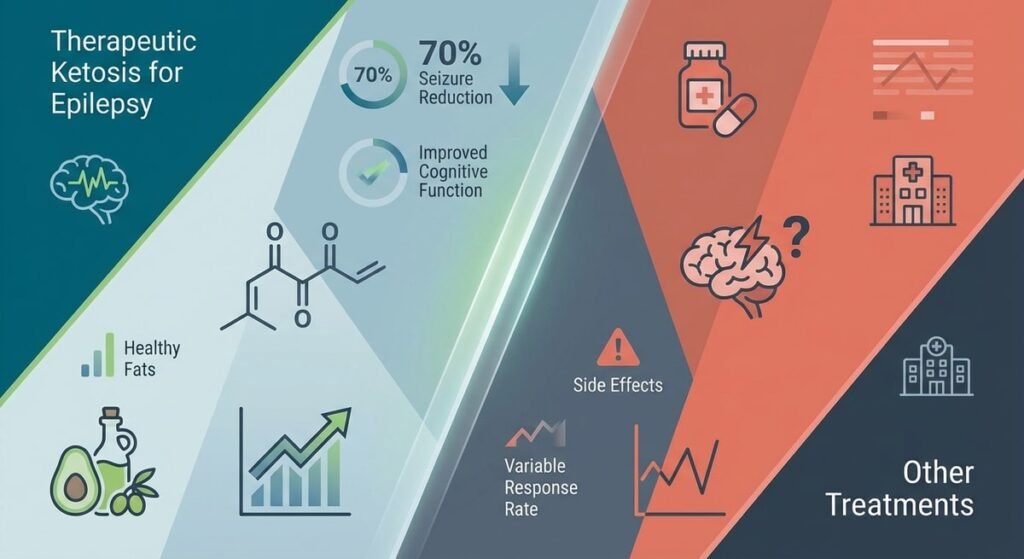
Numerous studies support that therapeutic ketosis can reduce seizure frequency, especially in drug-resistant epilepsy cases [[LINK:pubmed]].
Possible side effects
- Constipation
- Nutritional deficiencies
- Elevated cholesterol levels
- Keto flu symptoms (fatigue, headache, nausea)
Long-term sustainability
While some patients maintain therapeutic ketosis long-term, others find it challenging due to dietary restrictions or side effects. Regular medical oversight is essential to evaluate ongoing safety and efficacy.
Optimizing Sleep and Overall Quality of Life with Keto
Impact of ketosis on sleep
Emerging evidence suggests that ketosis may improve sleep quality by stabilizing blood sugar and reducing nighttime seizures. Adequate sleep enhances overall well-being and seizure management.
Lifestyle adjustments for better sleep
- Establish a consistent sleep schedule.
- Avoid late-night carbohydrate-rich meals.
- Incorporate relaxation techniques.
Enhancing quality of life
Adapting to a ketogenic lifestyle can improve mood, cognitive function, and energy levels, positively impacting daily functioning and mental health.
How We Chose
Our comparison of ketogenic approaches for epilepsy was based on a comprehensive review of scientific literature, clinical guidelines, and real-world clinical experiences. We evaluated factors such as efficacy in seizure reduction, safety profiles, dietary restrictiveness, ease of implementation, and long-term sustainability. This approach ensures that the information presented is balanced, evidence-based, and practical for diverse needs.
Conclusion
Therapeutic ketosis offers a promising avenue for epilepsy management, especially for individuals who do not achieve seizure control through medication alone. By understanding how it compares with other keto protocols, patients and caregivers can make informed decisions tailored to their health goals. Remember, implementing therapeutic ketosis requires careful planning, medical supervision, and ongoing monitoring.
Consult your healthcare provider today to explore whether therapeutic ketosis is appropriate for your epilepsy treatment plan and take proactive steps toward better seizure control and improved quality of life.
This article is for informational purposes only and does not substitute professional medical advice. Always consult a healthcare provider before starting any dietary therapy for epilepsy.
This article is for informational purposes only and does not substitute professional medical advice. Always consult a healthcare provider before starting any dietary therapy for epilepsy.
FAQ Section
Q: What is therapeutic ketosis and how does it help epilepsy?
A: Therapeutic ketosis involves maintaining elevated ketone levels through a specific diet to reduce seizure frequency. It is supported by research and often used when conventional treatments are insufficient.
Q: Can anyone with epilepsy try therapeutic ketosis?
A: Not everyone; it requires medical assessment, especially since it involves strict dietary changes and monitoring. Always consult a healthcare professional before starting.
Q: What are the risks associated with therapeutic ketosis?
A: Risks include nutrient deficiencies, keto flu, and potential metabolic imbalances. Proper medical supervision minimizes these risks.
Q: How long does it take to see results with therapeutic ketosis?
A: Results can vary; some patients experience seizure reduction within a few weeks, while others may take several months. Consistent monitoring and adherence are key.
Q: Is therapeutic ketosis safe long-term?
A: Long-term safety depends on proper management and medical oversight. Regular evaluations are necessary to prevent nutritional deficiencies and other issues.