Introduction
Monitoring your ketone levels is a vital component of optimizing your keto diet. Accurate tracking helps ensure you're maintaining ketosis, adjusting your intake, and reaching your health and performance goals. However, with a variety of testing options available—each with its own advantages and limitations—it can be challenging to determine which method best fits your lifestyle and needs.
This comprehensive guide compares the most popular ketone testing methods, examining their accuracy, convenience, cost, and suitability for different keto practitioners. Whether you're an advanced keto dieter, a health professional, or a dedicated enthusiast, understanding these differences will empower you to select the most effective tools for your journey.
Ketone Testing Preparation Checklist
- Identify your primary goal: Are you tracking for weight loss, performance, or medical reasons?
- Choose the testing method(s): Decide whether you prefer blood, urine, or breath testing based on your lifestyle.
- Gather necessary supplies: Purchase test strips, meters, or breath analyzers, and ensure they are within their expiration date.
- Establish testing times: Consistency improves accuracy; plan testing around fasting periods or post-exercise.
- Prepare your sample collection area: Clean hands or devices as needed to avoid contamination.
- Follow manufacturer instructions carefully: Proper sample collection and device calibration are crucial.
- Record results systematically: Use a journal or app to track trends over time.
- Maintain hydration: Hydration affects readings, especially with urine tests.
Types of Ketone Testing Methods
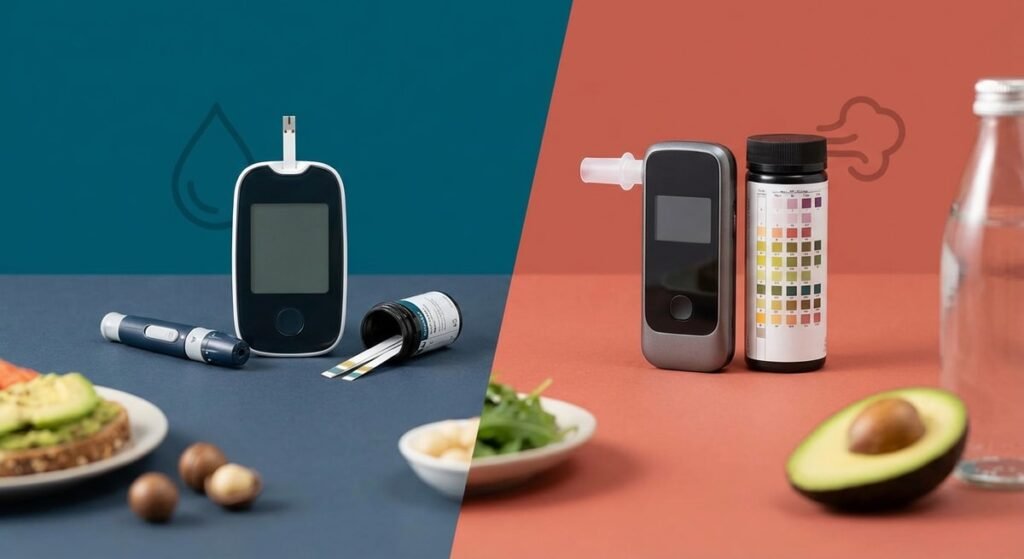
There are three primary categories of ketone testing: urine strips, blood meters, and breath analyzers. Each method varies in complexity, cost, accuracy, and user experience.
Urine Ketone Strips
Urine testing is the most accessible and affordable option, involving dip-and-read strips that detect acetoacetate—the ketone body excreted in urine.
Blood Ketone Meters
Blood testing measures beta-hydroxybutyrate (BHB), the primary circulating ketone in the bloodstream. It requires a small blood sample, usually obtained via finger prick, and provides real-time, precise results.
Breath Ketone Analyzers
Breath tests detect acetone, a ketone body eliminated through the lungs. Using a handheld device, users exhale into a sensor to gauge ketosis levels.
Accuracy and Reliability
Assessing the accuracy of ketone testing methods is essential for meaningful interpretation.
Urine Testing Accuracy
Urine strips are generally considered less reliable for ongoing monitoring because they reflect recent ketone excretion rather than current blood levels. They tend to become less sensitive over time as your body adapts to ketosis, leading to false negatives.
Blood Testing Precision
Blood ketone meters are regarded as the gold standard for at-home testing, offering high accuracy comparable to lab results. They measure BHB directly, providing precise readings that correlate well with blood ketone levels.
Breath Testing Consistency
Breath analyzers are convenient and non-invasive but can be influenced by factors like hydration and breathing patterns. While they are useful for trend tracking, their results are typically less precise than blood tests.
Cost and Budget Considerations
Cost factors include initial investment and ongoing expenses.
Initial Investment
| Method | Cost of Device | Cost of Consumables | Ongoing Expenses |
|---|---|---|---|
| Urine Strips | Low (~$10-$20) | Cheap (~$0.50-$1 per strip) | Replenish strips regularly |
| Blood Meter | Moderate (~$20-$50) | Expensive (~$0.50-$2 per strip) | Test strips and device maintenance |
| Breath Analyzer | High (~$100-$300) | Minimal (~$0.10-$0.20 per test) | Occasional calibration or replacement |
Cost-Effectiveness
Urine strips are the most affordable upfront but may become less reliable over time. Blood meters entail higher initial costs but deliver consistent, accurate readings, making them more cost-effective for serious practitioners. Breath analyzers offer convenience with moderate upfront investment but may lack the precision required for strict monitoring.
Ease of Use and Convenience
Sample Collection
- Urine: Simple dip-and-read process; no blood or breath required.
- Blood: Slightly invasive; involves finger pricking.
- Breath: Non-invasive; just exhale into the device.
Speed of Results
- Urine: Results in seconds; suitable for quick checks.
- Blood: Results in about 5-10 seconds.
- Breath: Immediate results; ideal for frequent testing.
User Experience
- Urine: Easy, but can be messy and less reliable over time.
- Blood: Slight discomfort but highly accurate; requires proper hygiene.
- Breath: Very user-friendly; no consumables needed.
Advanced Tips for Accurate Testing
Optimal Testing Times
- Test in the morning before eating or drinking to establish baseline ketosis.
- Check post-exercise or after fasting for more consistent results.
- Avoid testing immediately after hydration or high fluid intake, especially with urine tests.
Interpreting Results
- Urine: High levels indicate recent ketosis but may not reflect current status.
- Blood: Correlates directly with blood ketone levels; ideal for precise monitoring.
- Breath: Useful for trend tracking but less specific.
Maintaining Consistency
- Use the same testing method regularly.
- Test at similar times each day.
- Keep detailed logs to observe trends and adjust your diet accordingly.
Conclusion
Selecting the right ketone testing method depends on your individual goals, budget, and lifestyle. Blood testing offers the highest accuracy, making it ideal for those who require precise data, while urine strips provide an affordable, simple alternative. Breath analyzers balance convenience and non-invasiveness but may lack the detailed accuracy some advanced practitioners need.
Evaluate your priorities carefully, consider trying multiple methods to understand their differences, and choose the tool that best supports your keto success. For personalized guidance, consult with a healthcare professional or keto specialist.
Choosing the Best Ketone Testing Method
Start Here: Do you prioritize accuracy or convenience?
- Accuracy is most important → Consider blood ketone meters.
- Convenience and affordability → Urine strips are suitable.
- Non-invasive, frequent testing → Breath analyzers may work best.
Do you have a flexible budget?
- Yes → Invest in a high-quality blood or breath device.
- Limited budget → Start with urine strips and upgrade later if needed.
Are you a serious keto practitioner or medical patient?
- Yes → Blood testing is recommended for precision.
- No, casual user → Urine strips or breath analyzers may suffice.
Lifestyle considerations:
- Active, on-the-go → Breath analyzers provide quick, painless readings.
- Home-based, detailed tracking → Blood meters offer reliable data.
FAQ Section
Q: Which ketone testing method is the most accurate?
A: Blood ketone meters are widely regarded as the most accurate and reliable at-home testing method, providing results comparable to lab tests.
Q: Are urine ketone strips still effective for monitoring ketosis?
A: Urine strips are affordable and easy to use but may become less reliable over time as your body adapts to ketosis, and hydration levels can affect readings.
Q: How often should I test my ketone levels?
A: It depends on your goals, but many advanced keto practitioners test once or twice daily, typically in the morning and around workouts, to track trends.
Q: Can breath ketone analyzers replace blood tests?
A: Breath analyzers are convenient but generally less precise than blood tests. They are suitable for frequent, non-invasive monitoring but may not be ideal for strict accuracy needs.
Q: What is the best time of day to test ketones?
A: Testing in the morning before eating and after workouts can give consistent insights, but tracking multiple times per day helps identify patterns and optimal ketosis levels.
Remember: While ketone testing provides valuable insights, it is only one component of a successful keto lifestyle. Combine testing with proper nutrition, hydration, and lifestyle habits for the best results.