Introduction
Craving warm, comforting meals that fit your keto lifestyle? Look no further than Keto Soups Stews—delicious, nutritious, and easy-to-make low-carb dishes that support your health goals. Incorporating these hearty recipes into your meal plan can help you stay on track with your ketogenic journey while enjoying flavorful, satisfying food.
This guide explores the essentials of keto soups and stews, offering recipes, ingredient tips, and strategies to boost heart health. Whether you're a beginner or a seasoned keto practitioner, you'll find valuable insights to elevate your low-carb diet with wholesome, nutrient-dense options.
Keto Soup Decision Tree
Start Here: Are you looking for a soup or stew that is low in carbs and high in healthy fats?
- Yes → Do you prefer a creamy or broth-based dish?
- Creamy → Opt for recipes with coconut milk, cream, or cheese.
- Broth-based → Focus on clear, vegetable, or meat-based soups.
- No → Are you avoiding certain ingredients like dairy or specific vegetables?
- Yes → Choose recipes with substitutes or alternative ingredients.
- No → Explore popular recipes that suit your taste preferences.
Understanding Keto Soups and Stews for Heart Health
What Makes a Soup Keto-Friendly?
Keto-friendly soups and stews primarily emphasize low carbohydrate content, moderate protein, and high healthy fats. Typical ingredients include non-starchy vegetables like spinach, broccoli, and zucchini, while avoiding high-carb vegetables such as potatoes or corn. Incorporating sources of healthy fats, such as olive oil, coconut milk, or avocado, is essential for maintaining ketosis and supporting cardiovascular health.
Benefits for Heart Health
Research indicates that diets rich in healthy fats and fiber are beneficial for heart health. Keto soups and stews, when prepared with ingredients like omega-3-rich fish (e.g., salmon), avocados, and nuts, can help reduce inflammation, improve lipid profiles, and support overall cardiovascular function. Additionally, limiting processed ingredients and sodium content further enhances heart health benefits.
Nutritional Considerations
To maximize health benefits, focus on nutrient-dense ingredients. Incorporate anti-inflammatory spices like turmeric, garlic, and ginger. Monitor sodium levels, especially if using store-bought broths, and opt for homemade or low-sodium options. Balancing macronutrients ensures you stay within keto guidelines while nourishing your heart.
Popular Keto Soup and Stew Recipes
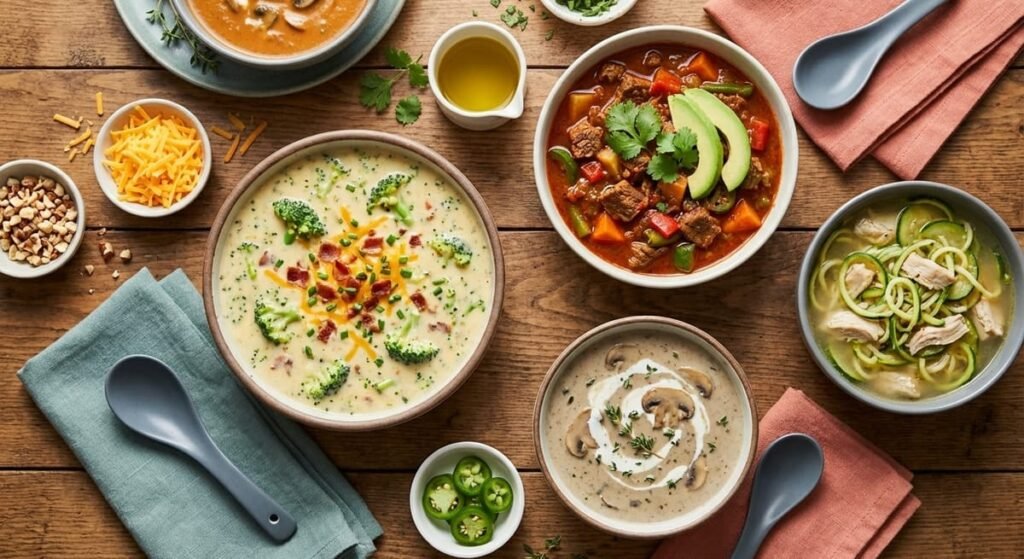
Creamy Broccoli Soup
A rich, velvety soup made with fresh broccoli, cream, and cheese, perfect for a satisfying meal.
Beef and Vegetable Stew
Slow-cooked beef with low-carb vegetables, seasoned with herbs and spices for a hearty, nourishing dish.
Spicy Chicken Soup
A flavorful, spicy broth with shredded chicken, cauliflower, and peppers, ideal for warming up on chilly days.
Ingredients and Nutrition for Keto Soups
Essential Keto-Friendly Ingredients
- Vegetables: Spinach, kale, zucchini, cauliflower, broccoli, mushrooms
- Proteins: Chicken, beef, fish, eggs, shrimp
- Fats: Olive oil, coconut oil, avocado, cheese, heavy cream
- Flavor Enhancers: Garlic, onion powder, herbs, spices like turmeric and cumin
Nutritional Breakdown
Most keto soups provide high fats, moderate protein, and minimal carbs. For example, a typical serving of creamy broccoli soup contains approximately 10g of fat, 4g of protein, and 5g of net carbs, making it suitable for keto adherence while supporting heart health.
Substitutions for Dietary Restrictions
- Dairy-free options: Use coconut milk or olive oil instead of cream and cheese.
- Vegetarian: Incorporate tofu or tempeh, and substitute meat with hearty vegetables.
- Low-sodium: Use homemade broth and limit added salt, emphasizing herbs and spices for flavor.
Cooking Tips and Storage
Best Cooking Techniques
- Use gentle simmering for stews to tenderize meat and meld flavors.
- Blend soups smoothly with an immersion blender for creamy textures.
- Roast vegetables beforehand for added depth of flavor.
Storing and Reheating
- Store leftovers in airtight containers in the fridge for up to 3-4 days.
- Freeze portions in freezer-safe bags or containers for longer storage.
- Reheat gently on the stove or microwave, adding a splash of broth or coconut milk if needed.
Meal Prep Strategies
- Prepare large batches on weekends for the week ahead.
- Chop vegetables and portion proteins in advance.
- Label containers with date and contents for easy access.
Enhancing Heart Health with Keto Soups
Incorporating Heart-Healthy Fats
Prioritize omega-3-rich ingredients like salmon, flaxseed, or walnuts. Use extra virgin olive oil for cooking and dressings, and include avocado slices in your soups for added monounsaturated fats.
Reducing Sodium and Preservatives
Opt for homemade broths and season with herbs and spices instead of salt. Read labels carefully when using store-bought products to avoid excess sodium and preservatives that can harm cardiovascular health.
Balancing Macronutrients
Ensure each serving contains a good balance of fats and proteins, with plenty of fibrous vegetables. This approach promotes satiety, stabilizes blood sugar, and supports overall heart health.
Comparison Matrix: Keto Soups vs Other Low-Carb Options
| Feature | Keto Soups & Stews | Paleo Soups & Stews | Low-Carb Diets (General) |
|---|---|---|---|
| Carbohydrate Content | Very low (~5g net carbs per serving) | Low, but may include some starchy vegetables | Variable, often low but can include higher carbs |
| Main Ingredients | Low-carb vegetables, healthy fats, proteins | Whole foods, no processed ingredients, some starchy vegetables allowed | Focus on low carb, flexible ingredients |
| Uses of Dairy | Common (cream, cheese) | Rare, dairy-free preferred | Varies, often includes dairy |
| Focus on Heart Health | Emphasizes omega-3s, healthy fats | Emphasizes whole foods, anti-inflammatory ingredients | Depends on specific diet plan |
| Preparation Time | Usually quick to moderate | Moderate | Varies |
| Best For | Heart health, ketosis, flavor variety | Whole-food, minimally processed diet | General low-carb adherence |
Methodology/Evaluation Criteria
The comparison is based on carbohydrate content, ingredient use, health focus, and preparation complexity to help readers choose the best option aligned with their health goals.
Keto Soup Preparation Checklist
- Select fresh, low-carb vegetables like spinach, zucchini, and cauliflower.
- Choose quality protein sources such as chicken, beef, or seafood.
- Incorporate healthy fats like olive oil, coconut milk, or avocado.
- Season with herbs and spices for flavor without excess sodium.
- Use homemade or low-sodium broth to control salt levels.
- Cook proteins thoroughly, then add vegetables and simmer until tender.
- Blend for creamy textures if desired, or leave chunky for hearty bites.
- Store leftovers in airtight containers, refrigerate or freeze as appropriate.
Conclusion
Keto soups and stews are versatile, nutritious, and essential components of a low-carb, heart-healthy diet. They offer a perfect balance of flavor, convenience, and health benefits when prepared thoughtfully with wholesome ingredients. Incorporating these recipes into your weekly meal plan can help you stay aligned with your wellness goals while enjoying satisfying, comforting meals.
Start experimenting with these keto-friendly recipes today—delight in delicious, nutrient-rich dishes that support your health and satisfy your taste buds!
FAQ Section
Q: Are keto soups suitable for beginners?
A: Yes, most keto soups are simple to prepare and require minimal ingredients, making them perfect for beginners looking to adopt a low-carb lifestyle.
Q: Can I make keto soups ahead of time?
A: Absolutely, keto soups often taste even better after sitting overnight. Store in airtight containers in the fridge for up to 3-4 days or freeze for longer storage.
Q: What are some common ingredients in keto soups?
A: Common ingredients include low-carb vegetables like spinach and broccoli, healthy fats like olive oil and coconut milk, and proteins such as chicken, beef, or fish.
Q: How do I keep keto soups heart-healthy?
A: Use healthy fats like olive oil, limit added salt, and include ingredients rich in omega-3 fatty acids, such as salmon or flaxseed, to promote heart health.
Q: Are keto soups filling enough for a meal?
A: Yes, when made with sufficient healthy fats and proteins, keto soups can be very satisfying and provide complete nutrition for a full meal.
Note: For further reading on heart-healthy diets and keto principles, visit Mayo Clinic and PubMed. For internal resources on meal planning, check out {{LINK:meal-planning}} and {{LINK:keto-recipes}}.
Embrace the warmth and nourishment of keto soups and stews—your taste buds and heart will thank you!