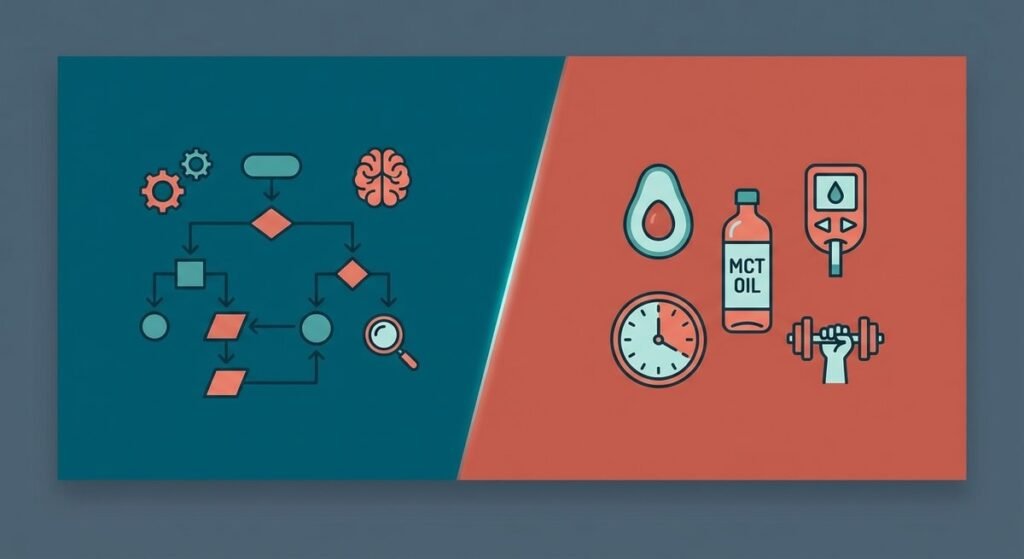
Introduction
Struggling to unlock the next level of your keto journey? If you’ve been following a standard ketogenic diet but hit plateaus or want to push your fat loss and metabolic flexibility further, advanced keto optimization techniques can make a significant difference. However, with multiple strategies available—such as carb cycling, targeted keto, cyclic keto, and supplement protocols—it can be overwhelming to determine which approach best suits your unique goals and lifestyle.
This comprehensive guide provides a clear decision rubric to help you choose the most effective advanced keto techniques tailored specifically to your needs. By following this structured approach, you can identify strategies that align with your goals, activity levels, and metabolic responses, maximizing your keto success and sustaining your progress.
Understanding Advanced Keto Optimization Techniques
What are these techniques?
Advanced keto strategies go beyond the basic low-carb, high-fat approach to fine-tune your metabolic state. They involve manipulating carbohydrate intake, timing, supplements, or fasting protocols to enhance fat loss, improve performance, or increase metabolic flexibility.
Why consider advanced strategies?
- Break through plateaus
- Optimize fat adaptation
- Improve workout performance
- Enhance hormonal balance
- Tailor your approach for specific health conditions or goals
Common goals and challenges
Many keto practitioners aim for:
- Faster fat loss
- Better energy levels during workouts
- Improved metabolic flexibility
- Managing social or lifestyle constraints
Challenges include: - Risk of losing ketosis
- Difficulty in balancing carbs and fasting
- Potential side effects or fatigue
Assessing Your Personal Goals and Lifestyle
Before diving into specific techniques, it’s crucial to assess your individual circumstances:
1. Identify your primary goals
- Fat loss
- Athletic performance
- Increased energy and mental clarity
- Long-term metabolic health
2. Evaluate activity levels
- Sedentary or minimal activity
- Moderate activity (e.g., regular workouts)
- Intense training or competitive sports
3. Consider health conditions
- Hormonal imbalances
- Thyroid issues
- Blood sugar regulation concerns
- Other medical conditions (consult your healthcare provider)
Using the Decision Tree to Select Techniques
Start Here: What is your main goal?
- Fat Loss & Plateau Breaking → Proceed to assess activity level
- Performance & Muscle Building → Proceed to evaluate carbohydrate tolerance
- Metabolic Flexibility & Long-Term Health → Consider sustainability and personal preferences
Step-by-step decision process
Question 1: What is your activity level?
- Low activity (sedentary/minimal movement) → Focus on techniques emphasizing fat adaptation and fasting
- Moderate activity (regular exercise) → Consider targeted keto or carb cycling
- High activity (intense training, sports) → Prioritize targeted keto or cyclical keto with supplementation
Question 2: How does your body respond to carbs?
- Easily maintain ketosis → You have flexibility to incorporate cyclical or carb cycling strategies
- Struggle to stay in ketosis → Focus on targeted keto or strict low-carb approaches
Question 3: Do you prefer structured plans or flexible approaches?
- Structured plans (scheduled carb refeeds, fasting windows) → Cyclical or targeted keto
- Flexible, spontaneous approach → Focus on supplement use and strategic timing
Interpret your results:
- If you answered "Low activity", consider fasting protocols, fat-adaptation techniques, or supplement strategies.
- If you answered "Moderate to high activity" and "Good carb tolerance", explore carb cycling or targeted keto.
- If you want maximum flexibility and performance, cyclical keto combined with targeted strategies may suit you best.
Next steps after decision
- Review the comparison matrix below
- Use the evaluation rubric to score your options
- Implement the selected technique gradually, monitor your response, and adjust accordingly
Comparing Techniques with the Matrix
## Advanced Keto Techniques Comparison Matrix
| Feature | Carb Cycling | Targeted Keto | Cyclical Keto | Supplement Use |
|---|---|---|---|---|
| Flexibility | Moderate | High | Very High | High |
| Best For | Fat loss, metabolic flexibility | Performance, workouts | Fat loss, metabolic flexibility | Supporting ketosis, energy, mood |
| Implementation Complexity | Moderate | Moderate | High | Varies |
| Effectiveness | Effective for fat loss & flexibility | Enhances workout capacity | Breaks plateaus, boosts fat loss | Enhances ketosis, reduces side effects |
| Sustainability | Good with planning | Good with discipline | Moderate, requires planning | Depends on supplement choice |
| Considerations | Carb refeed planning | Timing around workouts | Carb reintroduction, fasting | Quality, dosing, potential interactions |
Evaluating Techniques with the Rubric
## Technique Evaluation Rubric
| Criteria | Weight | Score | Explanation |
|---|---|---|---|
| Ease of Implementation | 30% | ⭐⭐⭐⭐ | How manageable is it in your daily routine? Carb cycling requires meal planning; targeted keto is simpler if timing is aligned with workouts. |
| Effectiveness | 25% | ⭐⭐⭐ | Does the technique reliably promote fat loss or performance? Carb cycling and targeted keto are proven effective when executed correctly. |
| Sustainability | 25% | ⭐⭐⭐⭐ | Can you maintain this strategy long-term without burnout? Supplement use can be sustainable if well-chosen. |
| Personal Compatibility | 20% | ⭐⭐⭐ | Does this approach fit your lifestyle, preferences, and metabolic responses? Flexible options like carb cycling suit many lifestyles. |
Conclusion
By systematically assessing your goals, activity levels, and personal preferences, you can confidently select the most suitable advanced keto optimization techniques. The decision tree helps clarify your starting point, the comparison matrix highlights key features of each strategy, and the rubric ensures that your choice aligns with your lifestyle and long-term sustainability.
Implement your chosen approach gradually, monitor your responses, and adjust as needed. Remember, the key to successful keto optimization is personalization and consistency.
Use these tools—decision tree, comparison matrix, and rubric—to craft a tailored keto strategy that propels you toward your health and performance goals. Start implementing your personalized plan today and unlock sustained keto success!
FAQ Section
Q: What are the most popular advanced keto techniques?
A: Popular advanced keto strategies include carb cycling, targeted keto, cyclical keto, and supplement use. Each offers unique benefits tailored to different goals such as fat loss, performance, or metabolic flexibility.
Q: How do I know which technique is right for me?
A: Your choice depends on your goals, activity levels, and how your body responds to carbs and fasting. Using the decision tree and evaluation rubric can help you identify the best fit.
Q: Can I combine multiple advanced techniques?
A: Yes, combining strategies like carb cycling with targeted keto can optimize results, but it’s important to do so carefully and monitor your body's response for safety and effectiveness.
Q: Are there risks associated with advanced keto techniques?
A: Some techniques may cause side effects such as fatigue or hormonal changes if not implemented properly. Consulting with a healthcare professional before making significant changes is recommended.
Q: How long should I try a new technique before evaluating its effectiveness?
A: Typically, give each technique at least 2-4 weeks to assess its impact. Adjustments can be made based on your progress and how you feel during the process.
Note: Always consult with a healthcare professional before making significant changes to your diet or exercise routines, especially if you have underlying health conditions.