Introduction
Starting a keto diet can be transformative—helping you shed excess weight, improve metabolic health, and boost energy levels. However, many newcomers stumble over common mistakes that can hinder progress or even derail their efforts altogether.
To help you navigate this low-carb journey smoothly, this article highlights the most frequent keto mistakes made by beginners, their impacts, and practical ways to avoid them.
Here’s a handy Common Keto Mistakes Checklist to self-assess your current habits:
- Are you tracking your carb intake accurately?
- Do you ensure adequate hydration and electrolyte balance?
- Are you reading labels carefully to avoid hidden carbs?
- Have you set realistic expectations for your progress?
- Do you incorporate lifestyle factors like sleep and exercise?
By understanding and correcting these errors, you can optimize your keto experience, reach your goals faster, and establish sustainable habits that support long-term health.
Main Sections
1. Ignoring Macros and Nutritional Balance
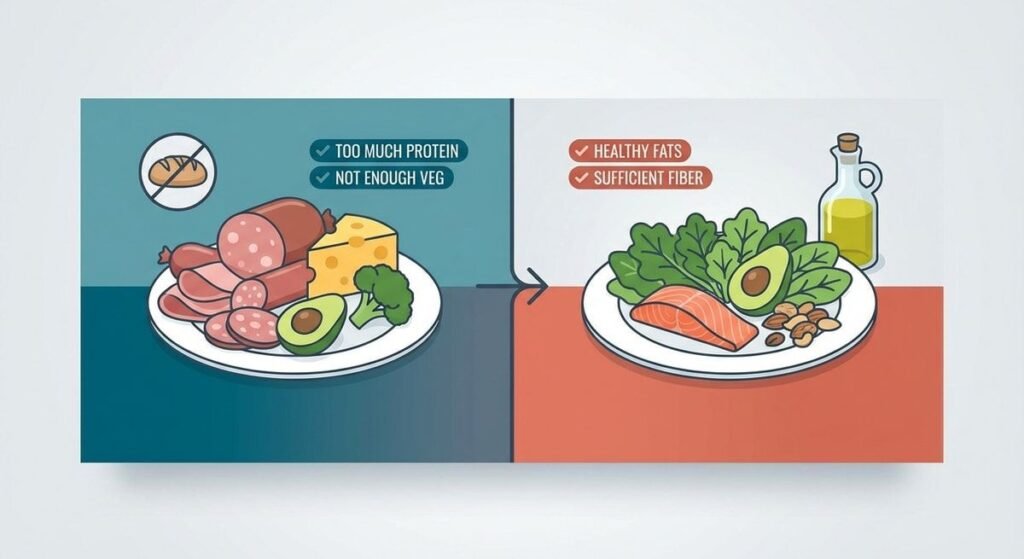
One of the foundational mistakes on keto is neglecting the importance of precise macronutrient ratios.
| Common Mistake | Impact | Correct Practice |
|---|---|---|
| Underestimating carb intake | Disrupts ketosis | Track carbs meticulously, stay below 20-50g net carbs/day |
| Not tracking fats and proteins | Imbalanced nutrition, stalled progress | Use a food diary or app to ensure proper macro ratios (e.g., high fats, moderate protein) |
| Overlooking micronutrients | Deficiencies, fatigue | Incorporate nutrient-dense foods—leafy greens, nuts, seeds |
Tip: Use a macro calculator to tailor your daily intake based on your goals and activity level.
2. Not Drinking Enough Water and Electrolytes
Dehydration and electrolyte imbalances are common during keto adaptation and can cause fatigue, cramps, and brain fog.
| Common Mistake | Impact | Correct Practice |
|---|---|---|
| Skipping water intake | Dehydration, constipation | Drink at least 8 glasses daily, more if active |
| Neglecting electrolytes (sodium, potassium, magnesium) | Muscle cramps, dizziness | Supplement or consume electrolyte-rich foods like avocados, nuts, and broth |
| Ignoring signs of imbalance | Headaches, fatigue | Monitor symptoms and adjust hydration accordingly |
Tip: Consider adding electrolyte supplements, especially during the first few weeks of keto.
3. Overlooking Hidden Carbohydrates and Processed Foods
Many processed foods and condiments contain hidden sugars or carbs that can knock you out of ketosis.
| Common Mistake | Impact | Correct Practice |
|---|---|---|
| Consuming sauces and dressings with added sugars | Unexpected carb spikes | Read labels carefully; opt for homemade or sugar-free options |
| Eating processed keto snacks | Excess carbs and unhealthy ingredients | Focus on whole, unprocessed foods |
| Not understanding net carbs | Surpassing daily carb limit unknowingly | Subtract fiber and sugar alcohols from total carbs to calculate net carbs |
Tip: Familiarize yourself with reading nutrition labels and ingredient lists effectively.
4. Expecting Rapid Results and Not Planning Long-Term
Impatience and lack of strategic planning are common pitfalls.
| Common Mistake | Impact | Correct Practice |
|---|---|---|
| Expecting immediate weight loss | Disappointment, frustration | Understand keto results vary; focus on health improvements |
| Lack of meal planning | Unhealthy food choices, overeating | Prepare weekly meal plans and batch cook |
| Ignoring potential plateaus | Stalling progress | Have patience; adapt your macros or activity level if needed |
Tip: Set realistic expectations and view keto as a sustainable lifestyle rather than a quick fix.
5. Neglecting Physical Activity and Lifestyle Factors
Keto isn’t just about food; lifestyle factors influence success.
| Common Mistake | Impact | Correct Practice |
|---|---|---|
| Avoiding exercise | Missed benefits of increased fat burning | Incorporate regular activity suited to your fitness level |
| Poor sleep quality | Hormonal imbalance, cravings | Prioritize 7-9 hours of quality sleep |
| High stress levels | Elevated cortisol, hunger | Practice stress management techniques like meditation or yoga |
Tip: Combine keto with a balanced lifestyle for optimal results.
How We Chose: Our Methodology
In evaluating common keto mistakes, we considered factors such as:
- Frequency of occurrence among beginners
- Impact on ketosis and overall health
- Ease of correction
- Supporting scientific evidence
- Practicality for diverse lifestyles
This comprehensive approach ensures our recommendations are relevant, actionable, and grounded in current nutritional science.
Decision Tree: Keto Mistakes Decision Tree
Start
│
├─ Are you tracking your macros accurately?
│   ├─ Yes → Proceed
│   └─ No → Track macros daily, adjust intake
│
├─ Are you drinking enough water and electrolytes?
│   ├─ Yes → Proceed
│   └─ No → Increase water, supplement electrolytes
│
├─ Are you avoiding hidden carbs?
│   ├─ Yes → Proceed
│   └─ No → Read labels carefully, choose whole foods
│
├─ Do you have realistic expectations?
│   ├─ Yes → Proceed
│   └─ No → Set achievable goals, be patient
│
├─ Are lifestyle factors (sleep, stress, activity) optimized?
│   ├─ Yes → Keep up the good work
│   └─ No → Improve sleep, manage stress, incorporate activity
Common Keto Mistakes vs. Correct Practices
| Mistake | Correct Practice | Impact of Correct Practice |
|---|---|---|
| Consuming high-carb processed foods | Choosing whole, unprocessed foods | Maintains ketosis and supports overall health |
| Ignoring macro tracking | Using apps and tools for precise tracking | Ensures proper macro ratios and ketosis sustainability |
| Not hydrating properly | Drinking sufficient water and replenishing electrolytes | Prevents dehydration symptoms and muscle cramps |
| Expecting rapid weight loss | Setting long-term, sustainable goals | Reduces frustration and promotes consistency |
| Neglecting lifestyle factors | Prioritizing sleep, managing stress, staying active | Enhances overall well-being and keto effectiveness |
Conclusion
Avoiding these common keto mistakes can significantly enhance your chances of success, making your low-carb journey more effective, sustainable, and enjoyable. Remember, keto isn’t just a diet—it’s a lifestyle shift that requires mindful adjustments and patience.
Start by assessing your current habits against this guide, implement small, manageable changes, and stay committed to your health goals. For personalized support, consider consulting a healthcare professional or a registered dietitian familiar with ketogenic nutrition.
This article is for informational purposes only and does not constitute medical advice. Consult with a healthcare professional before making significant dietary changes.
This article is for informational purposes only and does not constitute medical advice. Consult with a healthcare professional before making significant dietary changes.
FAQ Section
Q: What are the most common mistakes beginners make on keto?
A: The most common mistakes include consuming too many carbs, not tracking macros, neglecting electrolytes, eating hidden carbs, and expecting rapid results without long-term planning.
Q: How can I avoid carb creep while on keto?
A: Carefully reading labels, avoiding processed foods, measuring portion sizes, and sticking to whole foods help prevent unintentional carb intake that can disrupt ketosis.
Q: Is it necessary to take supplements on keto?
A: While not mandatory, supplements like electrolytes, magnesium, and vitamin D can help prevent deficiencies and support overall health during keto adaptation.
Q: How long does it typically take to see results on keto?
A: Initial weight loss can be noticeable within a week or two, but sustained results depend on adherence, lifestyle, and individual factors. Long-term benefits often appear over several months.
Q: Can I exercise while on keto, and are there specific tips?
A: Yes, exercise complements keto. Start gradually, stay well-hydrated, and ensure proper electrolyte intake to maintain energy and recovery.
By being aware of these pitfalls and actively working to avoid them, you can set yourself up for a successful and sustainable keto lifestyle. Remember, consistent, informed effort is key to long-term health and wellness.