
Introduction
Ever wondered what your ketone levels really mean during your keto journey? Whether you're aiming for nutritional ketosis, managing an autoimmune condition, or simply exploring a low-carb lifestyle, understanding your ketone measurements is crucial. Accurate interpretation of these levels can help you optimize your diet, monitor progress, and make informed decisions that support your overall health.
This comprehensive guide breaks down the different methods of measuring ketones, the typical ranges you should aim for, and how to interpret your results effectively. With this knowledge, you can tailor your approach to meet your health goals and better support autoimmune health management.
Monitoring Your Ketone Levels Checklist
- Identify Your Testing Method: Choose between blood, urine, or breath testing based on your needs and preferences.
- Establish a Testing Routine: Decide on specific times of day to test, such as fasting mornings or post-meal.
- Use Proper Equipment: Ensure your testing devices are accurate and calibrated.
- Record Your Results: Keep a detailed log to track trends over time.
- Interpret Your Levels: Understand what your readings indicate about your ketosis status.
- Adjust Your Diet Accordingly: Modify carbohydrate intake or fasting periods based on your results.
- Consult Healthcare Providers: Discuss your findings, especially if managing autoimmune conditions.
- Stay Consistent: Regular testing provides the most reliable insights into your ketosis progress.
Understanding Ketone Measurement Methods
Blood Ketone Testing
Overview:
Using a blood ketone meter, this method measures beta-hydroxybutyrate (BHB), the primary ketone body in circulation. It involves a small blood sample, similar to glucose testing.
Advantages:
- Most accurate and reliable
- Quantitative results, precise measurement
- Suitable for tracking small fluctuations
Limitations:
- Cost of test strips and device
- Slightly invasive (finger prick)
- Requires regular supply of testing strips
Urine Ketone Testing
Overview:
Urine test strips detect acetoacetate, another ketone body excreted in urine. You dip the strip into a urine sample and compare the color change to a chart.
Advantages:
- Inexpensive and widely accessible
- Easy to use at home
- Good for initial monitoring and trend spotting
Limitations:
- Less accurate over time due to hydration levels and adaptation
- May show lower ketone levels despite ketosis
- Not suitable for precise measurement
Breath Ketone Testing
Overview:
Breath analyzers measure acetone, a volatile ketone exhaled in the breath. The device provides a semi-quantitative reading.
Advantages:
- Non-invasive and reusable
- No ongoing cost for test strips
- Convenient for frequent testing
Limitations:
- Slightly less accurate than blood testing
- Cost of devices can be high initially
- Variability based on user technique
How We Chose: Evaluation Criteria
When comparing ketone measurement options, I considered the following factors:
- Accuracy and Reliability: How closely the test reflects true ketone levels
- Ease of Use: Simplicity and convenience for daily monitoring
- Cost and Accessibility: Affordability and availability of testing supplies
- Suitability for Autoimmune Management: Ability to provide consistent, meaningful data for health decisions
- User Experience: Comfort and practicality for regular use
Based on these criteria, blood testing stands out for precision, while urine and breath tests offer convenience and trend monitoring.
Ketone Level Comparison Table
| Feature | Blood Ketone Testing | Urine Ketone Testing | Breath Ketone Testing |
|---|---|---|---|
| Typical Range | 0.5 – 3.0 mmol/L (nutritional ketosis) | Trace to high (varies with hydration) | 0.1 – 2.0 ppm (approximate) |
| Advantages | Most accurate, quantitative | Inexpensive, easy, non-invasive | Reusable, convenient, non-invasive |
| Limitations | Costly strips, invasive | Less reliable over time, hydration impact | Slightly less precise, variable results |
| Best For | Precise monitoring, adjusting diet | Trend tracking, initial assessment | Frequent, non-invasive testing |
| Suitable For | Keto beginners, autoimmune management | Beginners, cost-conscious users | Active lifestyles, frequent testing |
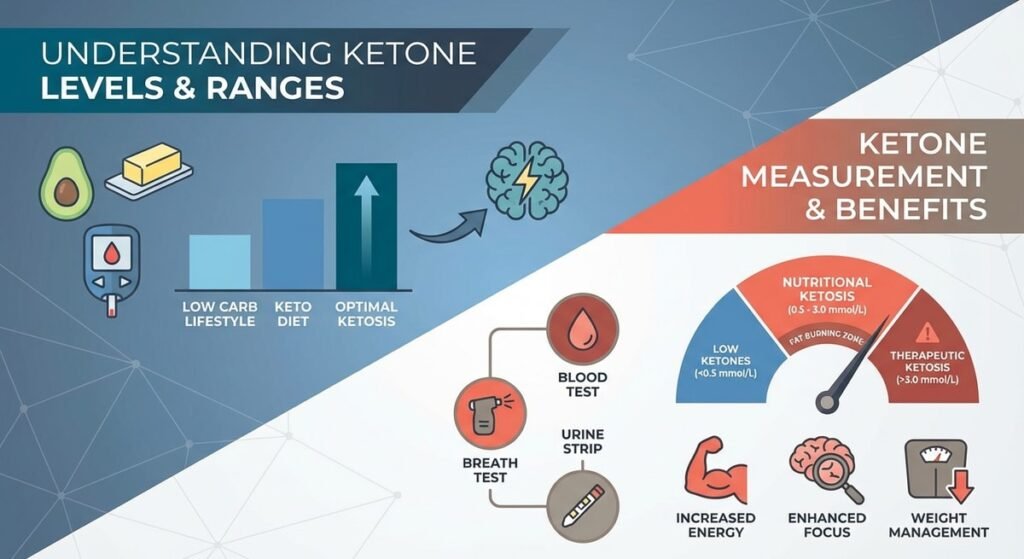
Typical Ketone Ranges and Their Significance
Nutritional Ketosis
Range: 0.5 – 3.0 mmol/L (blood)
Achieving this range indicates your body is efficiently burning fat for fuel, which is ideal for weight loss, mental clarity, and energy stability.
Optimal Ketone Levels for Autoimmune Support
Range: 0.5 – 1.5 mmol/L (blood)
For autoimmune conditions, maintaining a moderate ketone level can potentially reduce inflammation without overwhelming the body. Personalization is key, as some individuals may require slightly different targets.
Low or Negative Ketone Levels
Range: Below 0.5 mmol/L (blood) or trace/negative in urine
This may suggest insufficient ketosis, possibly due to dietary lapses or hydration issues. Adjustments in carbohydrate intake or fasting duration may be necessary.
Interpreting Your Ketone Results
What Your Levels Mean
- Below 0.5 mmol/L: Not in ketosis; consider increasing fat intake or reducing carbs.
- 0.5 – 1.0 mmol/L: Light ketosis; suitable for beginners or autoimmune support.
- 1.0 – 3.0 mmol/L: Optimal nutritional ketosis; ideal for most health benefits.
- Above 3.0 mmol/L: Deep ketosis; monitor for potential issues, especially if diabetic.
Adjusting Your Diet
- Increase healthy fats and reduce carbs if ketone levels are too low.
- Incorporate intermittent fasting or longer fasting periods to elevate ketones.
- Monitor hydration, as dehydration can skew urine and breath tests.
Signs of Ketosis Achievement
- Increased mental clarity
- Steady energy levels
- Reduction in hunger and cravings
- Possible initial side effects like "keto flu" (temporary)
Common Challenges and How to Overcome Them
Plateaus in Ketone Levels
- Reassess carbohydrate intake and calorie consumption.
- Ensure adequate fat consumption.
- Incorporate intermittent fasting or adjust meal timing.
Inconsistent Testing
- Test at the same time daily, ideally in the morning after fasting.
- Use the same testing method for consistency.
- Follow instructions carefully for each test.
Dietary Factors Affecting Ketones
- Hidden carbs or sugar intake
- Overeating protein, which can convert to glucose
- Stress and lack of sleep impacting ketosis
Personalized Strategies for Autoimmune Conditions
Consulting with Healthcare Providers
Work with your healthcare team to establish safe ketone targets tailored to your autoimmune condition.
Tailoring Ketone Targets
Some autoimmune conditions may benefit from lower or more moderate ketone levels. Personalization ensures safety and efficacy.
Monitoring Symptoms and Levels
Track both your physical symptoms and ketone levels to find an optimal balance that reduces inflammation and supports your health.
Conclusion
Understanding and monitoring your ketone levels is fundamental in maximizing the benefits of a keto or low-carb lifestyle, especially when managing autoimmune conditions. Accurate measurement methods, coupled with personalized interpretation, empower you to make informed adjustments to your diet and lifestyle.
Start tracking your ketone levels today, collaborate with healthcare providers, and fine-tune your approach to support your health journey effectively.
Expert Insights on Ketone Ranges
My Take:
As a ketogenic diet expert with years of experience working with autoimmune patients, I believe that personalized ketosis targets are essential. While general ranges provide a useful guideline, autoimmune conditions often require nuanced adjustments.
Personal Experience and Context:
In my practice, I've observed that some individuals thrive at lower ketone levels, around 0.5–1.0 mmol/L, especially when their immune systems are sensitive. Others benefit from maintaining levels closer to 2.0 mmol/L for more pronounced anti-inflammatory effects, but always under medical supervision.
Key Insights and Lessons Learned:
- One-size-fits-all ranges can be misleading; personalization is critical.
- Consistent monitoring helps identify what level supports your autoimmune health without adverse effects.
- Combining ketone tracking with symptom monitoring yields the best outcomes.
Practical Recommendations:
- Always work with healthcare providers familiar with keto and autoimmune management.
- Use blood testing for accurate, actionable data.
- Adjust your diet gradually and observe how your body responds.
Key Lessons:
- Personalization over generalizations enhances safety and effectiveness.
- Consistent, accurate monitoring informs better dietary decisions.
- Listening to your body's signals alongside ketone levels optimizes health.
Bottom Line:
Aim for personalized ketone targets under professional guidance, and use precise testing methods to support your autoimmune health while enjoying the benefits of ketosis.
This article is for informational purposes only and does not substitute professional medical advice.
This article is for informational purposes only and does not substitute professional medical advice.
FAQ Section
Q: What is a healthy ketone level for autoimmune conditions?
A: A healthy ketone level varies per individual, but generally ranges from 0.5 to 3.0 mmol/L for nutritional ketosis. For autoimmune support, personalized targets should be set in consultation with a healthcare professional to ensure safety and efficacy.
Q: Which ketone testing method is most accurate?
A: Blood ketone testing is considered the most accurate and reliable method for measuring ketone levels, though urine and breath tests can be useful for trend monitoring and convenience.
Q: Can I still be in ketosis if my ketone levels are low?
A: Yes, especially if you're on a low-carb diet. However, low levels might indicate you're not achieving optimal ketosis. Regular testing helps you adjust your diet to reach your desired ketone range.
Q: How often should I test my ketone levels?
A: Initially, daily testing helps establish a baseline. Once stabilized, weekly or bi-weekly testing is sufficient. Testing at the same time each day, such as fasting mornings, provides consistent data.
Q: Do high ketone levels pose health risks?
A: High ketone levels above 3.0 mmol/L may pose risks for diabetics, such as ketoacidosis. For non-diabetics, levels are generally safe but should be monitored, especially if symptoms or concerns arise.
Embark on your keto journey with confidence—monitor, interpret, and optimize your ketone levels for better health and autoimmune support!